Paul van Zoggel

Stuff on Didactics, Youth, Survival

  • Somebody told me the word School means in greek and latin ‘creative leisure’… This was the last drop I guess for me; how could we end up from creative leisure to what we send our children to now? The last real music lessons are currently being kicked out in Dutch primary school system… So School actually can’t be called school anymore.. It is a lie to be sued upon. I hear stories from parents their children are so bored they get all nervous sitting the whole day in there. I can imagine spasm is a frequent sight in classrooms.

    It is such a mess. And the state is not able to solve it for various reasons. There are very bright individuals in the Ministry of Education though the system surrounding their desk is so vast and segmented, the blood doesn’t flow well. To proof before hand a new method will work is impossible to do. At the same time we see children learning extremelly fast basic skills on the iPad. Also new methods, not tested before. Natural selection takes place in the App Store; good experiments are scaled up, the weak fall off. We can learn from this a lot.

    On the bright side!

    Maxima Zorreguieta has developed a plan in the light of the right for every child to make music. So maybe we just have to wait until her husband becomes our king, parlement runs out of money so we want the royal house to have more power, than Maxima can create some lasting change in education the way it should be.

    Or can’t we wait?
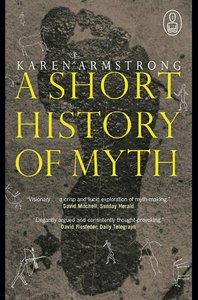
  • Karen Armstrong wrote a small book with the big story on stories; A Short History of Myth. It explores in only 176 pages the place and role of mythological stories in human cultures from tribes to religion to modern society.

    I grew up in a village where 0% diversity in ethical background was prevalent. The biblical mythology and nation state history were the two stories clearly presented. Though what is the story in multi ethical schoolclasses in a hyperconnected global village setting? What is the story to lay down the fear and love, self-esteem and compassion of our (future) times? Where is the book? Who can and is going to write it?

    I believe we have too, everybody who understands a part of their world should contribute. Somebody is a specialist in waterlilies role and place on the globe should be able to tell this to a 4 or 8 year old. You know the ideal pragmatic achievable car of the near future; children should hear these stories. The stories should get together in a new mythology using narrative principles to tell the story about the world we create for them.

  • (1) As a parent I see kids growing up with ipad.
    (2) And I see Al Gore’s ipad ebook taking off like a rocket.
    (3) And I remember all these great cd-rom discovery/exploring titles made in the 90’s which never saw real daylight. Millions have been invested back than. Where are they! I guess all these creators are scratching their head to see if they can get them relaunched on the ipad2, ipad3 or ipad4. I know one place in Salzburg Austria where they are almost ALL being saved in a timevault…  So by the time my son is 8, I guess he can play these 90’s titles? I hope.

    See Al Gore’s ebook in action and remember the 90’s cd-rom world.

  • Remember school as memorizing symptoms of society, how we calculate and communicate within society? In 250 weeks of highschool (12y-18y) I remember 2 weeks as ‘studium generale’; picking a theme and a challenge and figure out everything you can know about it! That is as passionate as we got in there. Now look at this;


    How cool is that kind of education?! I don’t agree school should only be (real world) problem solving, but a better half of all activities would be great. SO in my  2 weeks we almost got to the solutionist part, to actually think of a solution.  Though we never made it, after these 2 weeks of general study it was back to dealing with symptoms and tricks again..

  • Christopher Lloyd was at PINC11 and gave a history lesson of the world any child should get in primary school. It’s the evolutionist philosophy on matter development in 13 billion years. It’s a strong case to use a series of everyday objects (20) in a one day analogy to remember what on earth happened. Watch it for yourself!

  • “A man lives in a village next to a forest. One day he starts to talk to the villagers about the forest. ‘Did you know there are trees growing in there and each autumn the leaves fall, in the winter they look dead, though in the summer great fruits grow on them we can eat’. The villagers say ‘that’s awesome!’, I did not know, thank you, now I can feed my children more easy, I do not need to work so hard on my backyard. The man is excited he helped these villagers, and he figures to tell them more. ‘Did you know the ants can lift six times their own weight and everything is related to each other and he startes to talk about all the relations, bindings there are. The man really understands every little detail of the forest, it’s like Neo in the Matrix, he knows the transcript.”

    This story can develop in many ways… The villagers could get overwhelmed by the information, and some will help structuring. Some people might walk away, realizing they know enough to feed themselves. Some people realize the forest can be multiplied and so they do to care for more people.

    We would not believe the storyline, however, if the man proclaims the exact order of the trees and all the bindings is the only true way. Other forests, jungles and oases should be burned to be replaced by the one he believes in, understands, masters.

    The forest looks to be on it’s own, though is connected to the global ecosystem. One planet. We need forests, matter for our body. We need culture, immatter, for our mind. We need a certain amount of detail to support ourselves, in prosperity we just need to find the fruits as there are enough, in despair we need to understand the forest a bit better because we do not want to turn it into a desert, insanity.

    For nature, ‘we’ talk about climate change, local communities talk about the suffering of local forests in fear of hunger. I believe we should think more in this analogy also for the wellbeing of our minds.

    As all around we scream; “Look! trees!”

  • Like the 100 innovations by The Blue Economy I mentioned in earlier post. Here is another one; 50 innovations, Open Source Ecology; a toolkit to sustain your own village from 6.000 euro. So together al list of 150 innovations to sustain my world : ) How many more do we need? I don’t know, but if I have some time left I will analyze them to see where the gaps are.. Than we can start building our new ‘hoods’ taking the best from country and cityside living standards. Ofcourse, a TED vid, how else would I know ; ).

  • Franklin Roosevelt said; “the greatest thing we have to fear is fear itself”. According to Joseph Nye on global power shifts speaking at TED we can prevent fear of fear by understanding ‘power’ in the long tail context from history to future. It is not the ‘rise’ of China, though the ‘recovery’ of China, something not to be afraid off.

    He mentions hard power and soft power. Hard power can be with force, sticks. Or with money, carrots. Soft power is to have people choose a way you want something to go. This is something we need to re-master.  Propaganda by governments and marketing by corporations. There is a third which is key, and universal mythological storytelling in modern ways is part of it I guess…
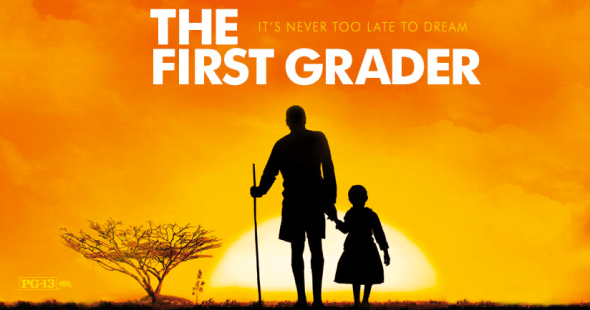
  • National Geographic has come with an interesting film based on a true story of an old man surviving the past and fighting to learn to read. ‘The Right to Learn’ – sentence struck me… Thinking about it for the current world, we also have the right to learn, though what if the language of teaching can no longer be understood by it’s pupils? We have the ability to learn, though the way and what should be learned is not really there… How can you practice your right to learn if the way of learning does not exist?

    Ofcourse I am floating here, though when all evidence is there we are not preparing our children for the world we have created, what right can be claimed? The right to understand your culture? To see futures, better futures? How?

  • Somehow the German language sounds good in philosophical quotes. There is a poetic rhythm to it, though a Dutch or English quote remains intense, this type of flow is absent. Walking down the street in Vienna I came across this one:

    Don’t see these often in the Netherlands! The true goal is to redesign society from scratch, which excludes poverty. (Original Quote needed).

    I found the campaign online here. It’s a series of six for/by the Vienna Museum, they won a prize, so hopefully more quotes will appear on the streets of Vienna.

    The six quotes are:

    Zeit für ein Zitat – Die Zitate:

    “Es genügt nicht die Welt zu verändern. Wir haben die Veränderung auch zu interpretieren.”
    Günther Anders 1902 – 1992

    “Die einzig revolutionäre Kraft ist die Kraft der menschlichen Kreativität.”
    Joseph Beuys 1921 – 1986

    “Es gibt Wichtigeres im Leben als beständig dessen Geschwindigkeit zu erhöhen.”
    Mahatma Gandhi

    “Eine Krise besteht darin, dass das Alte stirbt und das Neue nicht geboren werden kann.”
    Antonio Gramsci 1891 – 1937

    “Die Liebe ist nicht da, um uns glücklich zu machen. Ich glaube sie ist da, um uns zu zeigen, wie stark wir im Leiden und Tragen sein können.”
    Hermann Hesse 1877 – 1962

    “Das wahre Ziel ist, die Gesellschaft auf einer Grundlage neu aufzurichten, die die Armut ausschließt.”
    Oscar Wilde 1854 – 1900